

Finance & ERP
Microsoft Dynamics 365 Business Central
The Microsoft ERP sized — and priced — for small and mid-sized businesses
Watch
Watch · 0:55 · Olivia (AI-generated presenter)
No licence fee — so where does an ERPNext budget actually go? Olivia on hosting, decisions, data and training
This page contains affiliate links. If you buy through them we may earn a commission at no extra cost to you. See our affiliate disclosure.
Best for: Cost-conscious SMEs with in-house technical capability — or a good implementation partner — that want full ERP breadth without per-user licence costs.
ERPNext is the open-source outlier in the ERP market: a genuinely full-suite system — accounting, inventory, manufacturing, CRM, projects, HR and payroll (via the companion Frappe HR), asset management — released under the GPL with no locked modules and no per-user licence. The free tier is not a teaser; it is the entire product. Commercially, Frappe monetises hosting (Frappe Cloud: shared site plans from $5 per month, dedicated server plans from $40, with a 14-day trial — verified August 2026) and an ecosystem of certified partners.
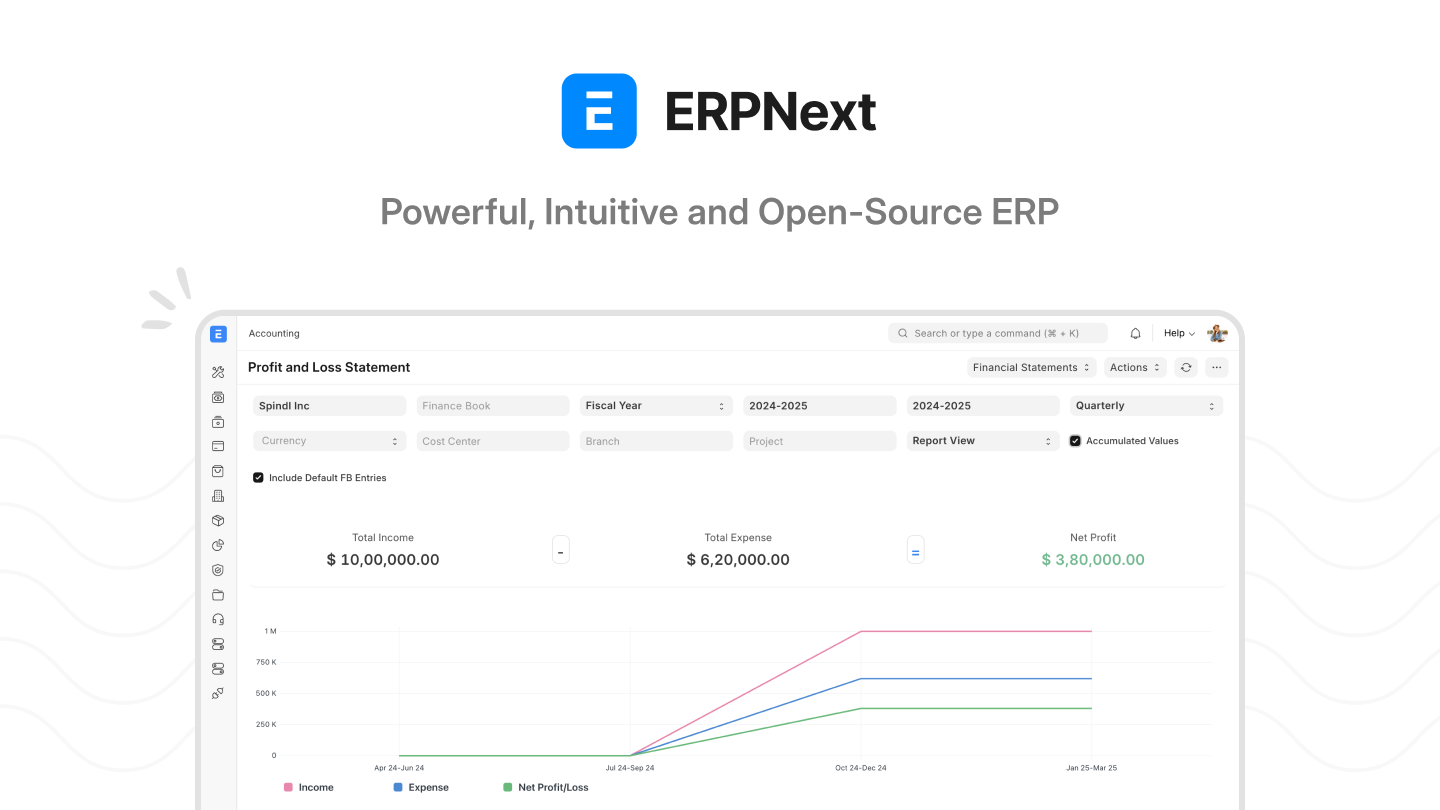
ERPNext's accounting workspace. Image: Frappe.
Unusually for this site, ERPNext is a product we know first-hand: we have implemented and operate it ourselves, including an education-sector deployment, so this profile draws on running the system in production rather than documentation alone. That experience cuts both ways. The breadth is real — it is startling how much of a business one install covers — and the Frappe framework underneath makes customisation unusually fast: custom fields, custom doctypes, server scripts and print formats without forking the product.
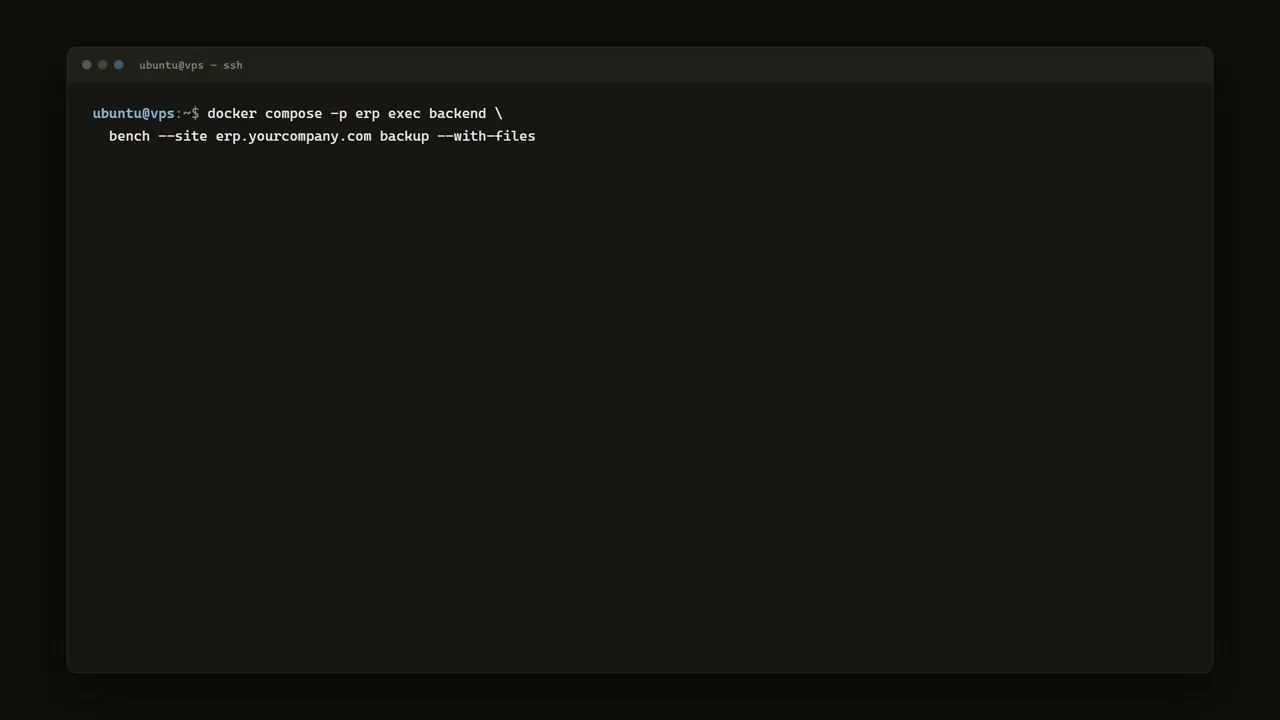
The honest trade-offs: self-hosting is a real operations job (updates, backups, performance tuning — version upgrades in particular deserve respect and a staging environment); the implementation-partner ecosystem, while growing, is far thinner than Microsoft's, and quality varies; and the UI, though much improved in recent versions, still has rough edges — list views and forms that feel utilitarian, occasional inconsistencies between modules. AI features are nascent compared with the Copilot story Microsoft is shipping.
For a cost-conscious SME with technical capability in-house — or access to a good partner — the economics are hard to argue with: the money that would have gone on licences goes into implementation and process work instead, which is where ERP value actually comes from.
ERPNext has almost no mainstream editorial coverage; the sources that exist agree it is capable and economical, and agree it demands technical capacity.
Consensus: both sources treat ERPNext as a serious, low-cost full-suite ERP for teams with in-house technical skill or a partner; neither recommends it to a non-technical business without one.
The software costs nothing; you pay for where it runs and who sets it up. Prices below are from Frappe's Frappe Cloud pricing page, as of September 2026.
| Option | Cost | What you take on |
|---|---|---|
| Self-hosted | Free software (GPL); your own server and time | Installation, updates, backups, security, monitoring |
| Frappe Cloud — shared site plans | From $5 per month, 14-day trial | Nothing operational: upgrades, offsite backups and monitoring are included; compute is limited on the smallest plans |
| Frappe Cloud — dedicated server plans | From $40 per month | Your own virtual machine, unlimited sites, predictable performance, server snapshots |
| Partner implementation | Quoted per project | The cost that decides success: process design, data migration, training |
Our experience: self-hosting is the right call when you already run Linux servers and want full control — our self-hosted ERPNext installation guide walks through it. For everyone else, Frappe Cloud removes the part of ERPNext that most often goes wrong — upgrades — for less than one seat of a proprietary ERP. For comparison, Microsoft's pricing page lists Business Central at $80 per user per month; ten users there cost more per month than a dedicated ERPNext server costs per year.
Longer than the install, shorter than a partner-led enterprise ERP. Installing takes an afternoon; implementing is a business project. The phases we plan for:
A single-company first phase is realistically planned in weeks to a few months; multi-company, manufacturing or heavy customisation extends that. The discipline that matters most: customise through custom fields, doctypes and scripts — never by editing core code — so upgrades stay routine.
Against Dynamics 365 Business Central, ERPNext trades the partner network and Microsoft 365 integration for zero licence cost and freer customisation. Against Dynamics 365 Finance & Operations it is a different weight class: F&O is built for multinational groups. Odoo is the closest rival in spirit, with a more polished interface and a per-user paid edition. Our Business Central vs ERPNext vs Dynamics F&O comparison sets them side by side, and the ERP guide for SMEs covers whether you need an ERP yet. More systems are listed under finance and ERP.
ERPNext's REST API makes integration straightforward: webhooks and an automation platform cover most needs — see Make vs Zapier. Built-in reports and dashboards handle operational reporting; for a management view that mixes ERP data with marketing numbers, Looker Studio or Power BI sit on top.
Yes. ERPNext is open source under the GPL, with every module included and no per-user fee. Costs come from hosting — your own server, or Frappe Cloud from $5 per month as of September 2026 per Frappe's pricing page — and from implementation time.
It suits small businesses that have either technical capacity in-house or a partner, and enough process complexity — stock, manufacturing, multiple companies — to need an ERP. A firm that only needs invoicing and bookkeeping is better served by accounting software such as Xero.
Frappe Cloud unless you have a reason not to. Self-host when data must stay on your own infrastructure, when you already operate servers, or when you need unusual system-level customisation.
CRM, projects, support, assets, manufacturing and accounting are in ERPNext itself. HR and payroll moved to the companion Frappe HR app, which installs alongside it at no licence cost.
Yes: bills of materials, work orders, subcontracting and production planning are built in, as are multi-company and multi-currency accounting with consolidated reports.
This is the ERP Digital4All knows best. See ERP advisory, or tell us about your project.
Pricing and hosting details as of September 2026, from Frappe's published pricing.
| Plan | Price | Includes |
|---|---|---|
| Self-hosted | Free | The full product, free under GPL — you carry hosting, updates and backups |
| Frappe Cloud (site plans) | $5 per site/month | Shared managed hosting from $5/mo, sized by compute; 14-day trial (verified Aug 2026) |
| Frappe Cloud (server plans) | $40 per server/month | Dedicated-VM plans from $40/mo, priced by resources and support tier (verified Aug 2026) |
| Implementation (partner) | Custom | Certified-partner or in-house; the licence is free but the implementation is not |
Finance & ERP
The Microsoft ERP sized — and priced — for small and mid-sized businesses
Finance & ERP
Cloud accounting with unlimited users — the adviser-channel favourite
Finance & ERP
Microsoft’s enterprise ERP for complex, multi-entity organisations
Finance & ERP
Self-service manufacturing ERP for 10-200 employee manufacturers
CRM & Sales
HubSpot vs Pipedrive vs Zoho CRM compared as of September 2026: free plans, real per-seat pricing, automation, AI and ease of use — verdict by use case.
AI & Automation
Make vs Zapier compared as of September 2026: credits vs tasks pricing at real volumes, ease of use, 3,000+ vs 9,000+ apps, AI features and a verdict.
Finance & ERP
When an SME really needs an ERP, what Business Central, ERPNext and Dynamics 365 F&O actually cost to run, and how to pick the partner who implements it.
Olivia · ERPNext
The free, open-source ERP most SMEs have never heard of — explained by Olivia
Digital4All · ERPNext
From an empty Ubuntu VPS to a running, HTTPS-secured ERPNext — the current official Docker method, step by step